Gym in Batumi: A Beginner's First Four Weeks
Your first month is a chance to learn the basics and find a manageable rhythm. Here is how I approach those early weeks with a beginner.
 Author: Lyudmila Overkovskaya
Personal fitness trainer in Batumi
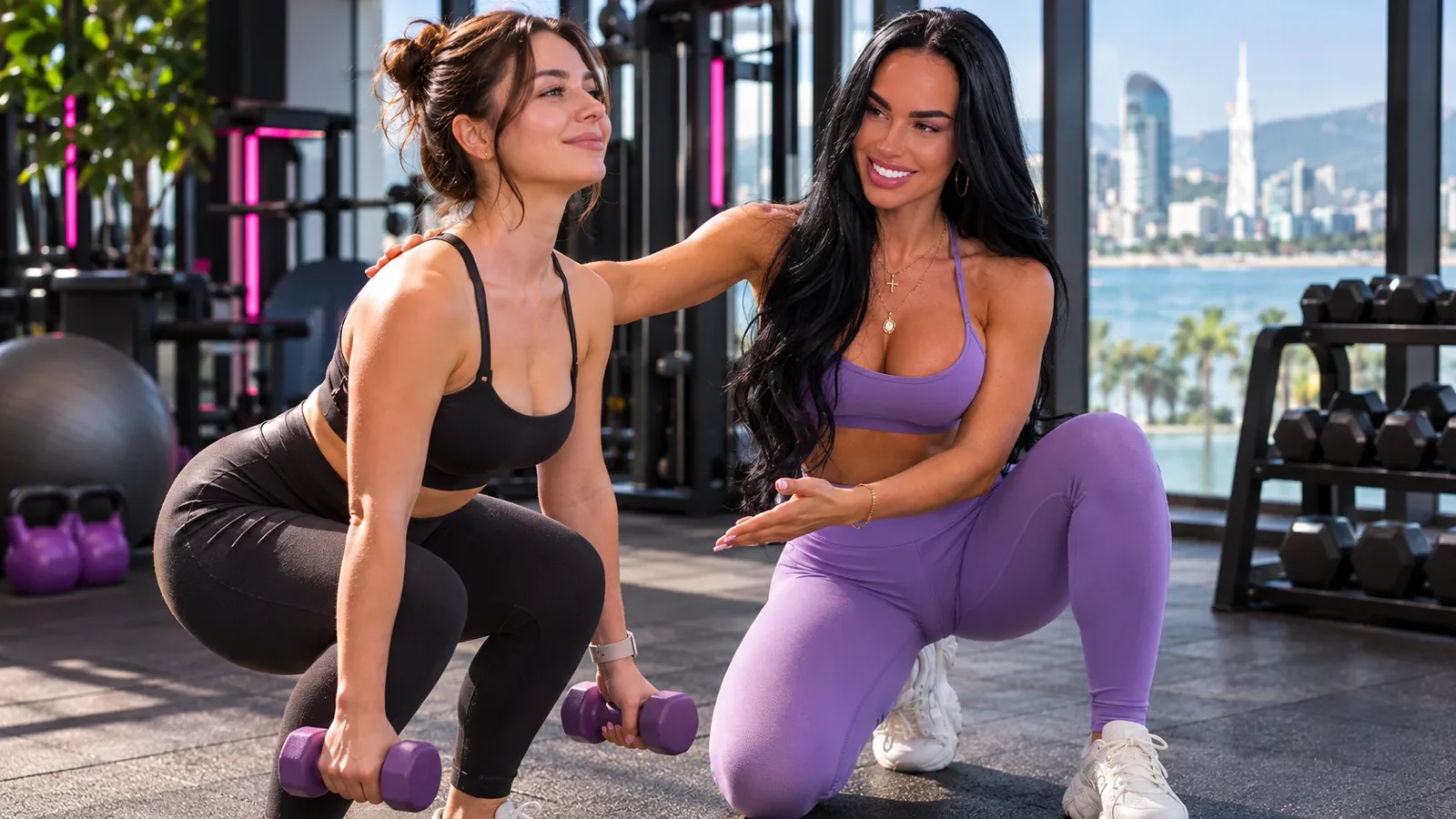
If you are joining a gym in Batumi for the first time, I suggest giving the first month a clear purpose: learn a few basic movements and find a schedule you can repeat. You do not need to try every machine. Knowing what to do next time is a useful place to begin.
I am Lyudmila Overkovskaya, a coach with more than 15 years of experience. Below is an example of how I introduce someone to training over four weeks. It is a starting framework for someone able to exercise, rather than a fixed prescription. I choose the exercises, workload and frequency after discussing your circumstances and seeing your starting level.
Before your first visit
Choose two realistic appointment windows on different days, with a break between them. Include travel, changing clothes and getting home. If the calendar allows only the minutes spent exercising, the appointment can quickly become difficult to keep. I prefer to make room for the whole visit from the beginning.
Check entry arrangements, payment and footwear rules. Pack water, a towel and clothes that let you bend, raise your arms and sit down comfortably. Buying a whole new training wardrobe does not need to delay your start. Arrive a little early so you can settle in and explain your experience without rushing.
Week one: understand the movements
I use the first week to get to know you. We talk about your goal, previous exercise and anything that concerns you about the gym. Then we try a few accessible movements. I look at whether the starting position is clear, whether you can stop when needed and how comfortably you repeat the action.
An example of a first session
- A few minutes of easy walking and a gentle warm-up.
- A squat towards a bench at a comfortable depth.
- A simple pulling exercise with suitable resistance.
- A press-up against a high, stable support.
- A calm finish and a conversation about how it felt.
I might begin with one set of each movement and then decide whether another would be useful. There is no target that must be completed regardless of technique. If an instruction does not make sense, I change the explanation or the exercise. The first visit should leave you with something you can understand and practise.
Week two: repeat what is becoming familiar
In the second week, I generally keep familiar exercises. Repeating them gives you a chance to pay less attention to the equipment and more attention to what you are doing. Perhaps you needed help finding your foot position last time and can now set it up yourself. That is worth noticing, even without a heavier weight.
Use a simple training note: the exercise, the version you used and a sentence about difficulty. For example, “Squat to a high bench; comfortable, but I started rushing near the end.” That gives us useful information for the next session. A page of abbreviations helps less if you cannot remember what they mean.
How I check the effort level
I ask whether you could still perform a few careful repetitions at the end of the set. In early sessions, I do not need you to reach the point where another repetition is impossible. If your breathing becomes difficult to manage or the movement changes noticeably, we pause and reassess. Rest belongs in the session too.
Week three: change one thing, if appropriate
Once a movement feels clearer, we can consider a small adjustment. That might mean a few more repetitions, another set or slightly more resistance. I choose one change and watch how you respond. There is no need to increase the weight, shorten rests and add more exercises all at once.
Sometimes work becomes demanding or sleep is disrupted during this week. In that case, we may keep the previous workload or simplify the session. The week number does not create an obligation to progress. I want you to understand the reason for today's version and finish with a clear sense of what you practised.
Week four: review the useful changes
At the end of the month, return to the original purpose. Is getting ready for the gym easier? Do you recognise the exercises? Can you explain what resistance you used and when you needed a pause? Those answers help us decide what to do next. The mirror alone cannot tell you how well this learning stage has gone.
We then review the schedule as well as the exercises. The frequency might work well, but another day could be more convenient. A familiar movement may be ready for a small increase in difficulty. Alternatively, keeping the plan short may be the best choice while your routine settles. The next month should reflect what actually happened.
Between training sessions
Leave room for ordinary movement and rest. A walk along Batumi's seaside boulevard can fit well if you enjoy walking. It does not need to become a distance target or a way to make up for a session that felt easy. Start with a route that leaves you comfortable with the rest of your day.
During hot, humid summer weather, allow time to arrive without immediately rushing into exercise. In the rainy autumn, think through your route and changing arrangements. Tell me if you are unusually tired after work. It is easier to adapt a session with that information than to guess why a familiar movement feels difficult.
Habits that can make learning harder
Choosing a completely new online programme every visit makes it difficult to remember technique or compare sessions. Copying the person beside you can be equally confusing: a similar exercise may involve a very different starting level. Your initial weight selection says nothing about your worth or your ability to learn.
Do not use pain to judge whether you worked hard enough. Stop an exercise that causes pain or unusual symptoms and tell your trainer; persistent concerns need medical assessment. I want honest feedback from the first day. You are allowed to ask for a pause, a different explanation or an easier version.
Your first-month checklist
- My training windows fit my actual week.
- I understand a few basic movements.
- I record the workload in plain language.
- I know how to ask for a pause or adjustment.
- I review consistency as well as effort.
I offer in-person sessions in Batumi, currently at Fitness Academy, 18A Pirosmani St. I speak Russian, English and Ukrainian, so we can use the language in which you feel most comfortable learning.
Book your first session through the form on the site or message Instagram @overkovskaja. Tell me about any previous training and the days that suit you, and we can build a manageable starting plan.
Key takeaways
How often should a beginner go to the gym?
Two sessions on separate days can be a useful starting example. I adjust the actual frequency to your preparation, recovery and available time.
Should I start with heavy weights?
I start with resistance that allows you to learn the movement with control. We consider increasing it when the current version is clear and repeatable.
What should I bring to my first gym session?
Bring comfortable clothes, appropriate shoes, water and a towel. Check the gym's entry arrangements and rules beforehand.